
What Is The Difference Between Potstickers And Dumplings
Hey there, food adventurer! Ever found yourself staring at a menu, eyes wide with wonder (and maybe a little hunger), trying to decipher the delicious mysteries of "potstickers" and "dumplings"? Yeah, me too. It's like a culinary riddle wrapped in a delicious doughy package. So, let's clear the air, shall we? Grab your virtual fork, settle in, and let's chat about these little flavor bombs.
First off, let's get one thing straight: all potstickers are dumplings, but not all dumplings are potstickers. Think of it like this: all squares are rectangles, but not all rectangles are squares. Mind-bending, I know! But stick with me, this is going to be fun, and by the end, you'll be a potsticker/dumpling guru, ready to impress your friends at your next dinner party (or just confidently order at your favorite Asian restaurant). No more awkward pointing and hoping for the best!
So, what exactly is a dumpling? In its grand, overarching, incredibly diverse form, a dumpling is basically a piece of dough wrapped around a filling. That's it! Simple, right? The world of dumplings is like a giant, delicious family reunion, with cousins from every corner of the globe. You've got your Italian ravioli, your Polish pierogi, your British suet dumplings, and of course, a whole treasure trove of Asian varieties. They can be steamed, boiled, fried, or even baked. The dough can be made from wheat flour, rice flour, potato, or a whole host of other things. And the fillings? Oh, the fillings! Meat, vegetables, cheese, fruit – the possibilities are as endless as your imagination (and your appetite).

Now, let's zoom in on our star of the show (or at least, one of them): the potsticker. This is where things get a little more specific. Potstickers are a type of Chinese dumpling, and their name, in itself, is a delicious clue. Ever heard the saying "necessity is the mother of invention"? Well, the potsticker is a prime example of that in the kitchen. The name "guotie" (锅贴), which translates to "pot stick," comes from the cooking method.
Picture this: you've made a batch of these lovely little dough pockets, probably filled with yummy minced pork and cabbage. Instead of just boiling them, someone, a brilliant culinary genius of history, decided to get a little creative. They put them in a hot, oiled pan and cooked them until the bottoms were beautifully golden brown and wonderfully crispy. Then, here’s the magic trick, they added a bit of water to the pan, quickly covered it, and let them steam. The steam cooks the top part of the dumpling while the crispy bottom remains, creating this amazing textural contrast. And voilà! You've got a potsticker. The little bit of water that gets trapped and steams the dumpling is what makes them "stick" to the pot if you're not careful, hence the name!
The Key Differences: A Delicious Breakdown
Alright, let's break down the main distinctions so you can confidently tell your grandma (or your waiter) the difference. It's all about the cooking method, my friends. That's the MVP here.
Cooking Method: The Real MVP
This is the biggest differentiator, hands down. If you see a dumpling that's been pan-fried on one side and then steamed, you're likely looking at a potsticker.
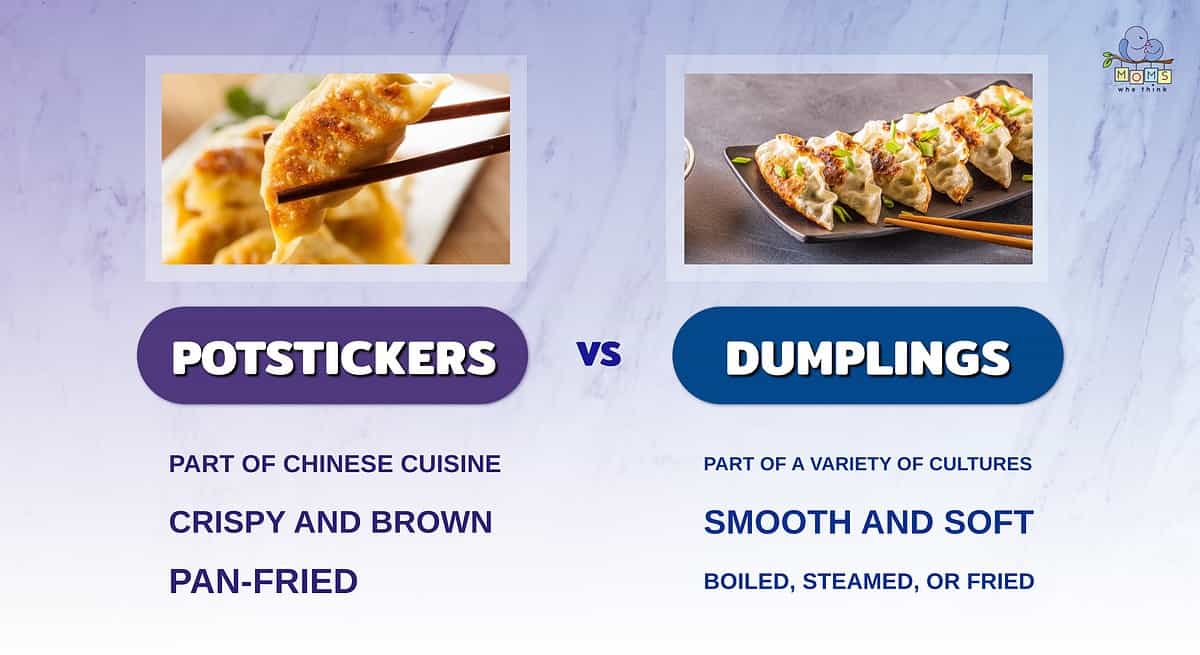
- Potstickers: Pan-fried and then steamed. This gives them that signature crispy bottom and tender, juicy top. They're often served with a dipping sauce, usually a mix of soy sauce, vinegar, and sometimes chili oil.
- Boiled Dumplings (Shui Jiao): These are your classic, all-around dumplings. They're simply boiled in water until they float to the top. They have a softer, chewier texture all around and are super versatile.
- Steamed Dumplings (Zheng Jiao): As the name suggests, these are cooked entirely by steam. Think of delicate, cloud-like pockets of goodness. They are usually very tender and moist.
- Fried Dumplings (Jian Jiao): These are typically deep-fried or pan-fried until they are crispy all over. Think of them as the little rebels of the dumpling world, going for maximum crunch.
See? The same basic concept – dough + filling – but the way you treat them in the kitchen makes all the difference in the world. It’s like giving the same ingredients to different chefs; you’ll end up with wildly different (but hopefully delicious) meals.
Shape and Size: A Matter of Opinion (and Tradition)
While cooking method is the primary distinction, there are some general tendencies when it comes to shape, though this can vary wildly depending on regional traditions and personal preference. It’s not a hard and fast rule, but more of a "you know it when you see it" kind of thing.
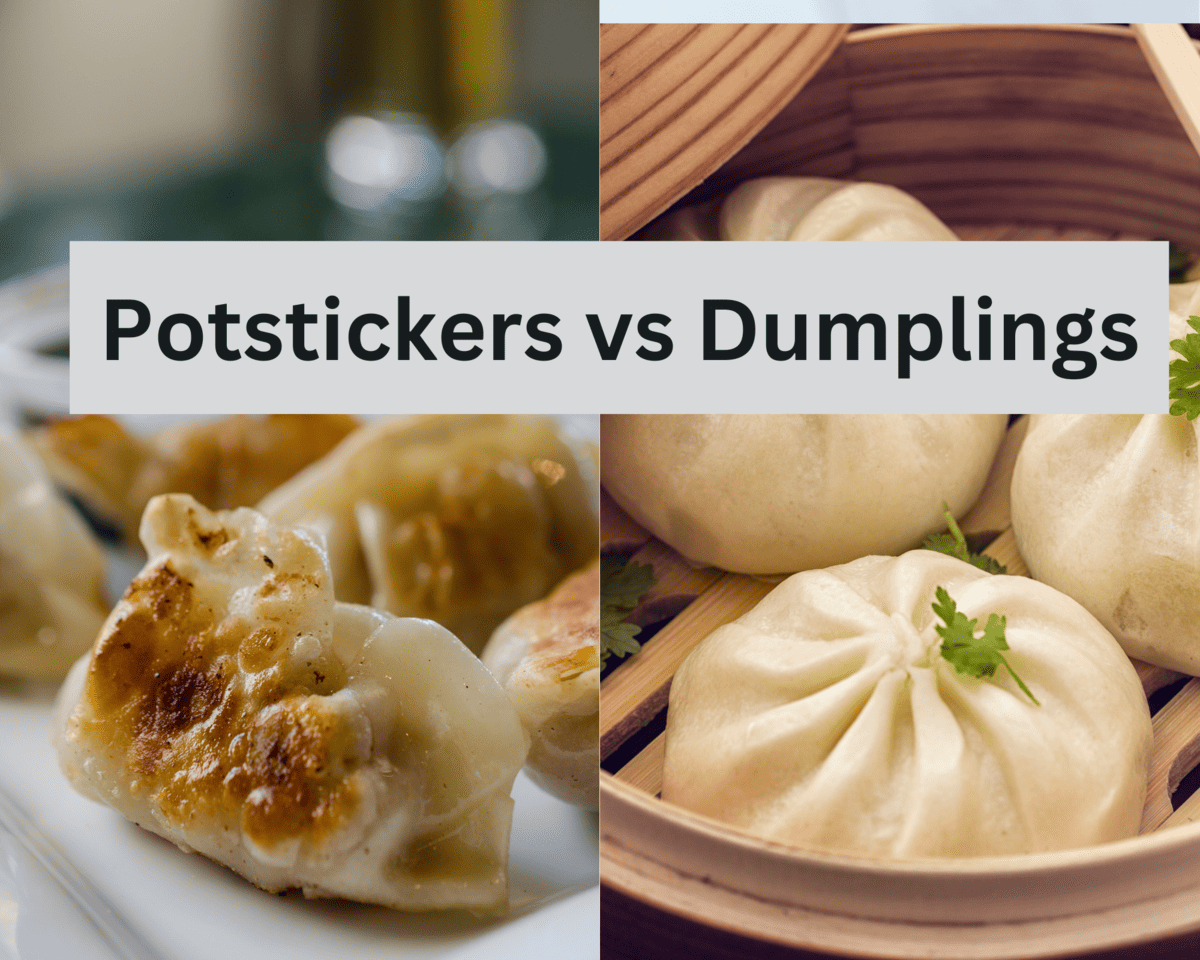
Potstickers are often crescent-shaped, resembling a little boat ready to sail into your mouth. They’re usually folded by pleating one edge of the wrapper to meet the other, creating those adorable little ruffles. They can also be made in a half-moon shape. The size can vary, but they’re generally a manageable, bite-sized (or two-bite-sized, depending on your enthusiasm) kind of deal.
Boiled or steamed dumplings, on the other hand, come in a dizzying array of shapes. They can be round, crescent-shaped, pleated, or even shaped like little purses. Some are tiny, perfect for a delicate appetizer, while others are generously sized, practically a meal in themselves. It’s a real choose-your-own-adventure situation!
Think of it like this: a potsticker is a specific style of dumpling, often characterized by its distinctive cooking method and a generally consistent shape. Other dumplings are more like the general category, allowing for a lot more variety in how they look and are prepared. It’s like saying "dog" (dumpling) versus "Beagle" (potsticker). All Beagles are dogs, but not all dogs are Beagles!
Texture: The Crispy vs. The Soft
This is where your taste buds really get to do the talking. The cooking method directly impacts the texture, and this is often the most immediate way you’ll notice the difference.
Potstickers offer that delightful textural adventure. You get the satisfying crunch from the pan-fried bottom, followed by the tender, slightly chewy wrapper and the juicy, flavorful filling. It’s a party in your mouth, with a little bit of everything going on.
Boiled dumplings are generally softer and chewier. The wrapper absorbs some of the water, giving it a more yielding bite. They’re comforting and smooth, perfect for when you want something that feels like a warm hug from the inside.
Steamed dumplings are usually the most delicate and tender. The steam gently cooks the wrapper and filling, resulting in a silky-smooth texture. They’re light and airy, often allowing the pure flavor of the filling to shine through without the distraction of a crispy exterior.
Fried dumplings, of course, are all about that crispy, golden-brown goodness all the way around. They’re more substantial and can be quite decadent, especially if they’re deep-fried.
So, if you're a fan of that delightful contrast between crispy and tender, a potsticker is your jam. If you prefer a uniformly soft and chewy experience, go for boiled. If you're all about the delicate and airy, steamed is your way to go. And if you just want to dive headfirst into a crispy, crunchy wonderland, well, then fried dumplings are calling your name!
Fillings: The Universal Language of Deliciousness
Here's some good news: the fillings for potstickers and most other dumplings are often quite similar! You'll find popular options like:
- Pork and Cabbage: A classic for a reason. Savory pork combined with the slight sweetness and crunch of cabbage.
- Shrimp and Chives: A lighter, brighter option with the delicate flavor of shrimp and the aromatic punch of chives.
- Chicken and Mushroom: Earthy, savory, and deeply satisfying.
- Vegetable Medleys: Often featuring Napa cabbage, carrots, mushrooms, and sometimes tofu for a vegetarian delight.
- Beef and Scallion: A hearty and flavorful combination.
The main difference here is less about what the filling is and more about how it complements the cooking method. For potstickers, the filling needs to be sturdy enough to hold up to the pan-frying and steaming process without becoming mushy. For boiled or steamed dumplings, the filling can be a bit more delicate as it’s cooked gently in water or steam.
Serving Suggestions: The Final Flourish
How you serve your dumplings can also be a subtle hint. Potstickers almost always come with a dipping sauce. This isn't just for show; it's to complement that crispy bottom and add an extra layer of flavor. A classic dipping sauce is a delightful blend of soy sauce, Chinese black vinegar, and often a touch of sesame oil and chili flakes. It’s the perfect tangy, savory counterpoint to the rich dumpling.
Boiled and steamed dumplings are also frequently served with dipping sauces, but they can also be enjoyed on their own, or sometimes added to soups! Imagine a steaming bowl of noodle soup with a few plump, perfectly boiled dumplings floating around. Heaven!
Fried dumplings are often served as a crispy appetizer, sometimes with a sweet and sour sauce or a spicy mayo. They’re usually the life of the party, demanding your full attention.
Putting It All Together: The Potsticker vs. Dumpling Family Tree
So, let’s visualize this delicious family tree. At the very top, you have the grand patriarch (or matriarch, we don't discriminate in the dumpling world!) called Dumpling. This is the overarching category. Underneath that, you have various branches:
- The Boiled Branch (Shui Jiao): Soft, chewy, classic.
- The Steamed Branch (Zheng Jiao): Tender, delicate, light.
- The Fried Branch (Jian Jiao): Crispy, crunchy, bold.
- And then, our star of the show, a very special sub-branch: The Potsticker Branch (Guotie). This branch is defined by its unique cooking method: pan-fried then steamed, giving it that signature crispy bottom and tender top.
It's like saying "fruit" (dumpling) and then having specific fruits like "apple" (boiled dumpling), "pear" (steamed dumpling), and "kiwi" (fried dumpling). And then, maybe the kiwi has a special way of being prepared, like being lightly grilled to bring out its sweetness – that's kind of like our potsticker!
So, the next time you’re faced with a menu of these delightful little packages, you can confidently say, "Ah, yes, a potsticker! My favorite kind of dumpling, characterized by its delightful pan-fried crispiness and tender steamed perfection." Or, if you’re feeling more adventurous, you can point to a different option and say, "I’ll have the boiled dumplings, please! I'm craving that wonderfully chewy texture today."
Ultimately, whether you call it a potsticker or a dumpling, one thing is undeniable: they are both incredibly delicious and bring a smile to people’s faces. They are little bundles of joy, perfect for sharing (or not sharing, we won't judge!) and are a fantastic way to explore the diverse and exciting world of international cuisine.
So go forth, my friends! Embrace the dough, savor the filling, and enjoy every single bite. May your dumplings always be perfectly cooked and your dipping sauces be plentiful. Happy eating!