
How Can You Mix Oil And Water
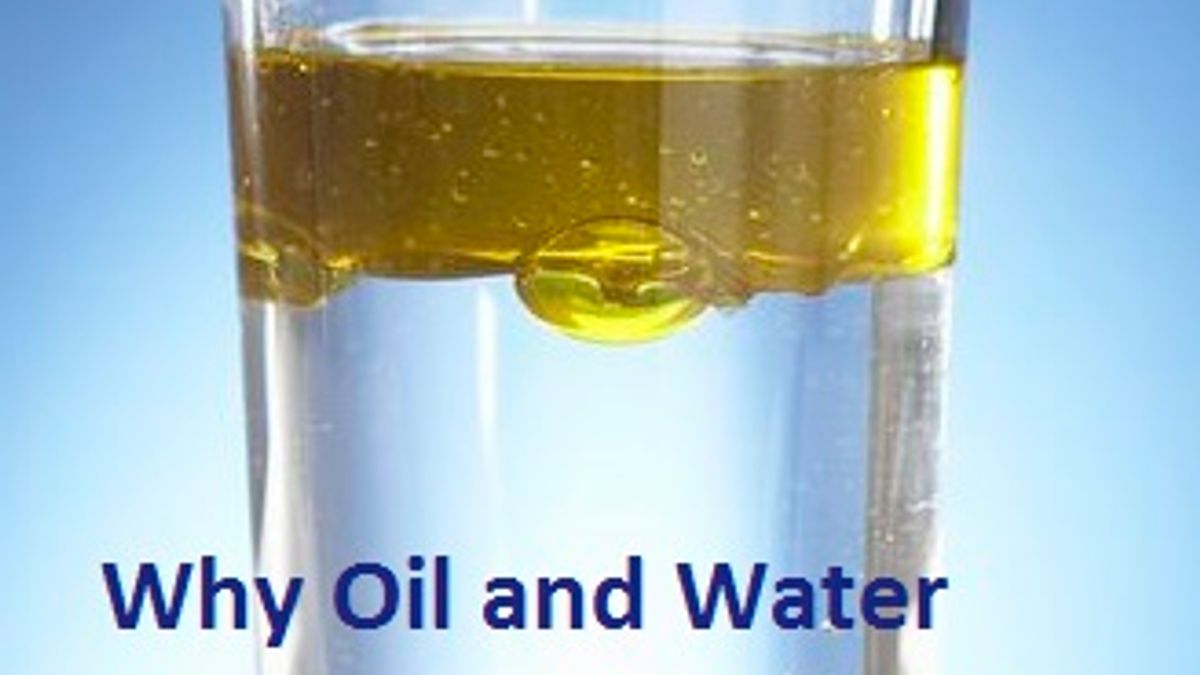
Okay, so you've probably heard it. The ultimate impossibility. Like trying to teach a cat to knit or finding a matching pair of socks. Oil and water. They just don't mix, right? Wrong! Well, mostly wrong. It's actually way more interesting than a simple "nope."
Think about it. That greasy sheen on your soup? That's oil and water having a little disagreement. Or that salad dressing that separates if you don't shake it? Yep, same story. They're like two stubborn toddlers at a playground, refusing to share the sandbox. Super frustrating, but also kinda fascinating.
So, why the beef? It all boils down to their molecules. Fancy word, I know. But stick with me! Water molecules are like tiny, super-friendly huggers. They love to stick together, holding hands and forming a tight little crew. They're called polar molecules, which is a bit like saying they have a little positive and negative side, making them really good at attracting each other.

Oil molecules, on the other hand, are more like lone wolves. They're not interested in all that close-contact stuff. They're nonpolar, meaning they don't have those distinct positive and negative ends. So, they just float around, not really bothered by water's clingy nature.
Imagine you're at a party. Water molecules are the people who immediately find their friends and form a huddle. Oil molecules are the ones who wander around, observing, maybe grabbing a solo snack. They're just not on the same wavelength. The water molecules are busy holding hands with other water molecules, and the oil molecules are chilling with their fellow oil molecules. They just don't see the appeal of holding hands with the "other" group.
This whole "like dissolves like" thing is a pretty big deal in chemistry. It's a fundamental rule. Water, being polar, likes to dissolve other polar things. Think sugar, salt. They disappear right into water like magic! Oil, being nonpolar, likes to dissolve other nonpolar things. Think grease stains on your favorite shirt. Water won't touch 'em, but a little bit of dish soap? Bingo!
But here's where it gets really fun. We can trick them. We can make them pretend to mix. It's like a chemistry magic show! The secret ingredient? Emulsifiers. These are like the ultimate party mixers.
What's an emulsifier? It's a molecule that has a split personality. One end loves water – it's hydrophilic, meaning "water-loving." The other end loves oil – it's hydrophobic, meaning "water-fearing." So, it's like this molecule has one hand reaching out to the water friends and the other hand reaching out to the oil friends. It's the ultimate diplomat!
When you add an emulsifier to oil and water, it acts as a bridge. It grabs onto the oil molecules with one end and grabs onto the water molecules with the other. This breaks the oil into tiny, tiny droplets, so small you can't even see them. And then, the water molecules surround these tiny oil droplets. They're still separate, technically, but they're now dispersed amongst each other. Ta-da! You've created an emulsion.
Mayonnaise. That's your classic, delicious example. It's basically oil and vinegar (which is mostly water) forced to hang out thanks to egg yolks. Egg yolks are packed with lecithin, which is a super powerful emulsifier. So, the oil and water can't get away from each other because the lecithin is holding them hostage... I mean, bringing them together.
And it's not just food! Think about lotions and creams. They're often emulsions of oil and water. That smooth, creamy texture? That's the emulsifier doing its job, keeping everything from separating into oily slicks and watery puddles. Isn't that neat? Your face cream is basically a tiny chemistry experiment.
What about milk? Yep, milk is an emulsion too! It's fat (oil) dispersed in water. Those little fat globules are surrounded by proteins that act as emulsifiers. So, when you pour milk, you're pouring a perfectly happy, albeit temporary, oil-and-water party.
Then there are things like salad dressings. You have oil, vinegar, and often some kind of thickener like mustard or honey, which act as emulsifiers. Shake it up, and for a little while, they're buddies. Leave it too long, and they remember their differences and start to segregate again. It's a constant reminder that even with a little help, their true nature can re-emerge.
It's kinda like a really good friendship that needs constant effort. You can't just set it and forget it. Emulsions are often unstable. That means, given enough time or the right conditions, the oil and water will eventually go their separate ways. The tiny droplets will merge back into bigger blobs of oil, and you'll see that separation again. That's why you shake your dressing or stir your soup.
But the act of making them mix, even temporarily, is the fun part. It's about understanding the forces at play, the molecular dance. It's about seeing something that seems impossible become possible, even if it's just for a little while.
And the types of emulsifiers are wild! We have natural ones like lecithin in egg yolks, and others like proteins and gums. Then we have synthetic ones, designed specifically for different purposes. It’s a whole industry built on the idea of making oil and water best friends.
Think about how this applies to our everyday lives. Cleaning products rely on emulsifiers to lift grease and dirt. Paints are often emulsions. Even some medicines use emulsions to deliver drugs effectively.
So, next time you see oil and water refusing to mingle, remember: it's not about hate, it's about molecular preference. And with a little bit of scientific savvy and a good emulsifier, you can throw the most epic oil-and-water party they've ever seen. It’s a little bit of science, a little bit of magic, and a whole lot of fun to understand.

It's a reminder that even things that seem fundamentally opposed can find a way to coexist, to blend, to create something new and wonderful. All it takes is the right helper, the right nudge, the right understanding of how the world around us works. So go forth, be curious, and maybe try making your own mayonnaise. You're basically a kitchen chemist!