
Can You Scuba Dive To The Titanic
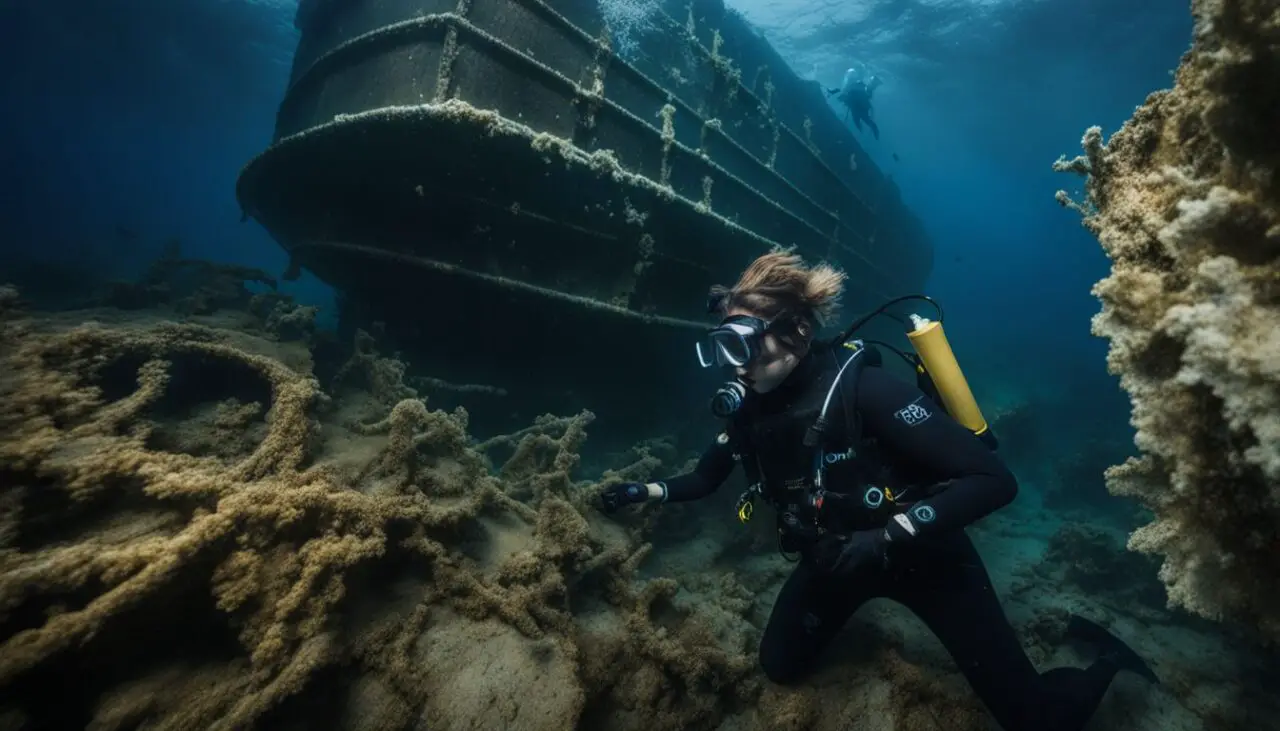
I remember, clear as day, flipping through a tattered National Geographic magazine when I was a kid. It was dog-eared, probably borrowed from a library, and the pages smelled faintly of old paper and adventure. There was this incredible, full-page spread of the Titanic. Not the glamorous, movie-version Titanic, mind you, but the eerie, rusted wreck resting on the ocean floor. It looked like a ghost town swallowed by the sea, and my young brain couldn't quite comprehend it. How did they get there? Was it… was it scuba diving?
Fast forward a couple of decades, and that childhood curiosity hasn't faded one bit. In fact, it’s only grown. The Titanic remains this immense, almost mythical, symbol of tragedy and engineering marvel. So, naturally, the question pops into my head, often during a lazy Sunday afternoon or while staring at a particularly uninspiring spreadsheet: Can I scuba dive to the Titanic? Like, just me, a tank of air, and the grand staircase? It sounds like the ultimate adventure, right?
Well, buckle up, because the answer is… it’s a lot more complicated than just strapping on a mask and fins. The dream of swimming amongst the ghostly remains of the "unsinkable" ship is a powerful one, but the reality is a stark reminder of the unforgiving nature of the deep sea.

The Myth vs. The Reality
Let's get this out of the way first: scuba diving to the Titanic is, for all intents and purposes, impossible for the average recreational diver. And even for many highly experienced divers. Why? The primary culprit is depth. The Titanic lies at a staggering depth of about 12,500 feet (around 3,800 meters). To put that into perspective, the deepest a recreational scuba diver typically goes is around 130 feet (40 meters).
Think about that for a second. 130 feet is where you might see some interesting coral formations or a larger reef fish. 12,500 feet is… well, it’s a whole different planet. The pressure at that depth is immense. We’re talking about pressures that would crush a submarine if it wasn’t specifically designed to withstand it. Your everyday scuba tank and regulator are designed for a fraction of that pressure. They’d be useless, and worse, incredibly dangerous.
It’s like asking if you can walk to the moon. The desire is there, the concept is understandable, but the physics and technology simply aren't aligned for your average stroll. Your standard-issue fins and mask are great for exploring a local dive site, not for descending into the abyssal plain.
The Extreme Demands of Deep-Sea Exploration
So, if scuba diving is out, how do people get to see the Titanic? This is where we enter the realm of specialized expeditions, requiring immense resources, cutting-edge technology, and a team of highly trained professionals. We're talking about advanced submersibles, not BCDs and dive computers.
These expeditions use specialized vehicles, often called Human Occupied Vehicles (HOVs) or Remotely Operated Vehicles (ROVs). Think of them as incredibly robust mini-submarines. They are built to withstand the crushing pressure of the deep ocean and are equipped with sophisticated lighting systems and robotic arms to capture images and even collect samples. These aren't your weekend warrior dive boats, folks. These are multi-million dollar operations.
The divers who do go down on these expeditions are not your typical holidaymakers. They are often highly specialized commercial divers or marine scientists who have undergone extensive training in extreme environments. They might be using specialized diving gear that is far beyond anything available to recreational divers, perhaps even using specialized gas mixes that allow them to go deeper, but even then, 12,500 feet is well beyond the reach of even the most advanced saturation diving techniques.
Saturation diving, for those who aren't familiar, is a technique where divers live under pressure in a habitat for extended periods, breathing a mixture of gases. This allows them to work at great depths for long durations without suffering from decompression sickness. However, even this technique has its limits, and the Titanic is far beyond them.
The "Technically" Possible, But Highly Impractical Scenarios
Okay, so direct scuba diving is a no-go. But let’s indulge in a little bit of “what if.” Are there any fringe cases, any theoretical scenarios, where something resembling scuba diving might be involved? This is where we get into the really niche, almost science-fiction territory, but it’s fun to think about!
One might imagine a scenario involving a very specialized, deep-diving rebreather system. Rebreathers recycle the air you exhale, making them incredibly efficient for extended dives. However, even the most advanced rebreathers currently available are not designed for depths anywhere near the Titanic. Pushing the limits of even specialized rebreather technology would still fall far short of the 12,500-foot mark.
Another theoretical possibility could involve a sort of “transfer dive.” Imagine a submersible that goes down to a certain depth, say a few hundred feet, and then… well, this is where it gets tricky. Even if you could somehow maintain a stable environment at that intermediate depth, the logistics of transitioning from a submersible to open water and back, all while dealing with the immense pressure and the cold, are mind-boggling. And you'd still be a LONG way from the seabed.
Then there's the cost. Even if, purely hypothetically, you could design a scuba system capable of reaching those depths (which, again, is not currently feasible), the cost of developing and testing such a system, not to mention the extreme safety precautions required, would be astronomical. We’re talking about prices that would make buying a private jet look like pocket change.
The Danger Factor is Off the Charts
Let's not forget the sheer danger involved. The deep ocean is an incredibly hostile environment. Here are just a few of the delightful challenges:
- Extreme Pressure: We've touched on this, but it bears repeating. The pressure at 12,500 feet is approximately 6,000 pounds per square inch. That's like having 50 jumbo jets stacked on top of you. Your body, and any equipment not specifically designed for this, would be instantly crushed.
- Extreme Cold: The water temperature at the Titanic's depth is a frigid 32-34°F (0-1°C). Without specialized thermal protection, hypothermia would set in rapidly, even if the pressure wasn't an issue.
- Absolute Darkness: Sunlight doesn't penetrate anywhere near this depth. It's pitch black. Navigation relies entirely on artificial lighting, and even then, visibility is limited. Imagine trying to find your way around in a completely dark, crushing void.
- Decompression Sickness (The Bends): Even if you somehow managed to ascend from such a depth (which, again, is not possible with standard scuba), the risk of decompression sickness would be astronomical and almost certainly fatal. The amount of nitrogen and other inert gases that would build up in your tissues at that pressure would require an incredibly long and complex decompression schedule.
- Equipment Malfunction: In the extreme environment of the deep ocean, any minor equipment failure can have catastrophic consequences. There's no "surface" to swim to for help.
So, the idea of casually scuba diving to the Titanic is not just impractical; it's a recipe for disaster. It’s a romantic notion, but one that clashes violently with the harsh realities of physics and physiology.
So, How DO We Experience The Titanic (Without the Risk)?
Since we can’t exactly book a scuba diving trip to the Titanic anytime soon, how can we still satisfy that urge to connect with this legendary wreck? Thankfully, there are other ways to get up close and personal, albeit indirectly.
Submersible Expeditions: As mentioned earlier, these are the primary way to visit the Titanic. Companies like OceanGate Expeditions (though they've unfortunately faced tragic circumstances, their previous expeditions illustrate the concept) have offered voyages in specialized submersibles. These are still incredibly expensive and require a significant commitment, but they are the closest you can get to physically seeing the wreck.
Documentaries and Films: This is probably the most accessible way for most of us. The wealth of documentaries produced about the Titanic, from early explorations to modern-day analyses, offers stunning visuals and fascinating insights. Films like James Cameron's Ghosts of the Abyss provide incredible footage captured by ROVs and submersibles. They bring the wreck to life, allowing us to “explore” it from the comfort of our own homes.
Virtual Reality (VR) Experiences: As technology advances, so do our ways of experiencing places. There have been VR experiences developed that aim to recreate the Titanic, including the wreck site. While not the same as being there, these can offer an immersive and educational glimpse into the underwater world of the Titanic.
Museums and Artifacts: Many museums around the world house artifacts recovered from the Titanic. Seeing a piece of the ship firsthand, knowing its history and its final resting place, can be a deeply moving experience. It's a tangible connection to the past.
The Enduring Allure
The Titanic’s story is a powerful one, a tapestry of human ambition, hubris, and tragedy. It continues to capture our imaginations, and the idea of visiting its final resting place is, for many, the ultimate adventure. While a leisurely scuba dive amongst the grand salons is firmly in the realm of fantasy, the spirit of exploration and the desire to understand this historical marvel are very real.
So, can you scuba dive to the Titanic? The definitive, and most responsible, answer is no. But that doesn't mean the dream has to die. It just means we need to find different, safer, and more technologically advanced ways to experience its silent, watery grave. And honestly, knowing the extreme challenges involved only makes the real expeditions that much more awe-inspiring. It’s a testament to human ingenuity and our unyielding curiosity about the mysteries that lie beneath the waves.

Maybe one day, with advancements we can't even conceive of now, something like extended deep-sea scuba diving will be possible. Until then, we'll have to content ourselves with watching those incredible documentaries and marveling at the sheer audacity of those who do make the journey.